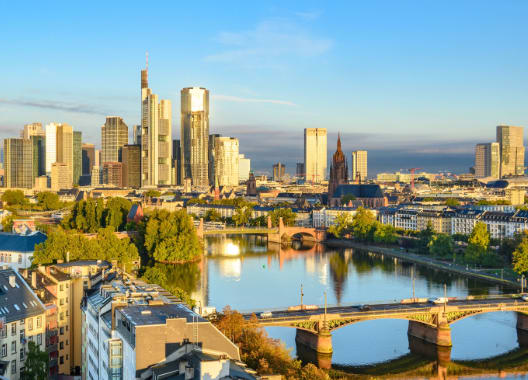
Amsterdam Data Centers: Powering Finance, Tech, and Innovation



Amsterdam stands as more than a historic city of canals. It's the beating heart of continental innovation. Strategically positioned within the FLAP-D market (Frankfurt, London, Amsterdam, Paris, Dublin), this city serves as the gateway between Europe and North America, powered by a diversified economy, a prime location, and a highly educated workforce.
In this blog, we'll explore how Amsterdam evolved from a trading hub to a digital fortress, the role of data centers in accelerating Financial Services and Tech innovation, and what the future holds for this dynamic city.
A Hub built for Global Interconnection
Amsterdam’s transformation began in the early 17th century, pioneering the modern credit system during the Dutch Golden Age and becoming the world's first modern financial center with the establishment of the Amsterdam Stock Exchange in 1602. This historical milestone laid the foundation for Amsterdam's evolution into a major business hub, further accelerated by its early role in the rapid rise of the internet — most notably when the first email from the European continent was sent from Amsterdam in 1988, from what is now the AMS9 datacenter at Amsterdam Science Park.
Today, Amsterdam serves as a home to numerous multinational corporations, financial institutions, and cutting-edge fintech startups. The city's ability to blend historical financial expertise with modern technology infrastructure makes it uniquely positioned for the digital economy.
Why Amsterdam? Europe's Critical Digital Gateway
Today, the Dutch economy encompasses finance, technology, life sciences and health, logistics, renewable energy, cleantech, circular economy initiatives, agrifood, and creative industries. The country has undergone a digital renaissance, attracting global technology, fintech and cloud companies to establish regional hubs. Amsterdam is home to major European headquarters for international companies, drawn by the city's unique combination of business advantages and quality of life.
The Amsterdam metropolitan area represents one of Europe's most mature digital ecosystems. With nearly 78% of the Netherlands' data center market share, Amsterdam has long dominated the Dutch digital infrastructure landscape. Today, however, planning restrictions in and around Amsterdam continue to shape how organizations plan for growth, particularly for larger-scale developments. For customers with expanding capacity requirements, the path forward runs through smart, distributed strategies that extend beyond the municipality while preserving access to Amsterdam's world-class connectivity.
Amsterdam’s concentration of digital resources creates powerful network effects, enabling lower-latency connections, richer ecosystems for interconnection, and more competitive service offerings. Companies that establish operations in Amsterdam gain immediate access to a dense cluster of cloud providers, content delivery networks, and enterprise customers. For any organization looking to expand across EMEA, it is essential to consider GDPR and EU data residency, where proximity is more than a performance advantage — it's a compliance imperative. Data sovereignty rules require that certain workloads remain within the EU, making Amsterdam's interconnected ecosystem a strategically essential location for European operations.
Key elements of the current economic landscape include:
- Robust infrastructure: Amsterdam is home to the Amsterdam Internet Exchange (AMS-IX), which recently reached a new all-time peak of 15 Tbps traffic (April 2026), making it one of the world's largest internet exchanges. The city is highly connected via fiber optic networks and serves as a key subsea cable landing point, with direct connections to the eastern seaboard of the United States, London, and other major cities across the Atlantic.
- Innovation-driven business environment: The Dutch government offers incentives such as the WBSO R&D tax credit, which reduces payroll taxes for software development, and the Innovation Box, which provides favorable corporate tax rates for qualifying intellectual property. The Highly Skilled Migrant Visa program offers a more streamlined process for talent acquisition for international companies.
- Talent-rich ecosystem: The city boasts a highly skilled, multilingual workforce largely fluent in Dutch, French, German, and English. The Netherlands is home to 10 universities in the QS Europe top 100 — more than any other country except the UK and Germany — making it easier to conduct business across borders and attract international talent.
Planning your infrastructure strategy in Amsterdam? Explore our Amsterdam data centers.
Powering the AI Revolution Responsibly
AI & Machine Learning
Amsterdam is rapidly emerging as a center for artificial intelligence (AI) development. The city leads Europe in early-stage AI investment and accounts for over 70% of venture capital flows in the Netherlands alongside the broader Randstad region. Major companies have significant operations there, while a thriving startup ecosystem focuses on AI applications across fintech, healthcare, and sustainability sectors.
The escalating demand for AI-ready infrastructure is a major catalyst for the expansion of Amsterdam data centers, requiring facilities capable of supporting high-density computing. Modern AI workloads demand substantially more power per rack than traditional IT applications, with some AI clusters requiring 50-100 kW per rack compared to 5-10 kW for conventional workloads. This shift necessitates data center infrastructure that can deliver high-density power alongside advanced cooling technologies, including direct liquid cooling systems capable of handling the thermal output of densely packed Graphics Processing Unit (GPU) arrays.
Amsterdam's AI ecosystem benefits from strong collaboration between universities, research institutions, and commercial enterprises. The city's focus on AI development, data privacy, and European regulatory compliance makes it an attractive location for companies seeking to deploy AI solutions that serve European markets while adhering to GDPR and other data sovereignty requirements.
Sustainability
Amsterdam stands out as a below-sea-level city, well protected by sophisticated water management infrastructure, that leads in sustainability, leveraging canal water for innovative cooling and pioneering circular-economy approaches in data center operations. The city is addressing the challenges of rapid expansion, including growing energy demands and sustainability requirements, by focusing on renewable energy sourcing, green design, and energy efficiency measures.
The Netherlands has set ambitious targets for renewable energy adoption, and Amsterdam's data center sector is at the forefront of this transition. Beyond renewable energy procurement, Amsterdam data centers are exploring district heating systems that capture waste heat from computing operations and redistribute it to warm nearby buildings — an approach already being implemented in other countries. For example, our Stockholm campus has been connected to the Open District Heating Network (Öppen fjärrvärme) since 2015, helping to heat tens of thousands of nearby homes using excess heat from our server halls and contributing to a more circular energy economy.
This dual focus on supporting high-performance computing while minimizing environmental impact positions Amsterdam to lead the next wave of sustainable digital growth. As enterprises increasingly prioritize environmental, social, and governance criteria in their infrastructure decisions, Amsterdam's green credentials become a significant competitive advantage.
The role of Digital Realty data centers in Amsterdam
Digital Realty's data centers in Amsterdam provide scalable power, high-density AI-ready capabilities, robust connectivity to over 280 service providers, 200 carriers and major internet exchanges and operational resilience aligned to modern IT infrastructure needs. As one of the leading data center providers in the region, Digital Realty operates 12 data centers across the Amsterdam metropolitan area, delivering more than 130MW of total IT capacity across 79,800 m² of colocation space, while connecting customers to a global platform of 300+ data centers worldwide.
This extensive footprint enables Digital Realty to serve diverse customer requirements, from financial services firms requiring ultra-low-latency connectivity to hyperscale cloud providers deploying AI infrastructure at scale. The company's strategic positioning within Amsterdam's digital ecosystem ensures customers benefit from proximity to major internet exchanges, subsea cable landing stations, and enterprise connectivity hubs.
Digital Realty's groundbreaking partnership with SURF, the ICT cooperative of Dutch education and research institutions, demonstrates the company's ability to accommodate complex, highly specialized deployments. This collaboration hosts both the Dutch Supercomputer Snellius and the Netherlands' first quantum computer at Digital Realty's AMS17 facility in Amsterdam's Science Park, showcasing the infrastructure's ability to support cutting-edge research and next-generation computing technologies.
Digital Realty's partnership with SCION (Scalability, Control, and Isolation On Next-generation networks) brings a secure alternative to conventional internet routing — offering greater path control and enhanced routing security features that can support sovereignty-focused architectures. With the financial sector among the primary beneficiaries and the Netherlands positioned as a strategic early-adopter region in Europe, this collaboration ensures our Amsterdam customers are connected through infrastructure built for the future.
Discover what our robust data centers in Amsterdam have to offer, including:
- Global ecosystem leverage: With PlatformDIGITAL® and ServiceFabric®, customers gain access to a data-centric architecture that allows for customized deployments of any size and scale, along with suitable connectivity options across Digital Realty's global platform.
- Sustainability leadership: Facilities are matched with 100% renewable energy, consistent with Digital Realty's standard practice across its entire European portfolio, and feature both traditional air-based cooling and advanced direct liquid cooling for AI workloads, ensuring efficiency and scalability for next-generation applications.
- Enterprise-centric security and compliance: Providing secure, scalable, low-latency, connected infrastructure designed to align with European data sovereignty standards, supporting finance, tech, and enterprise growth while supporting stringent compliance requirements.
- Growth with AI-ready datacenters: The newly launched AMS11 campus adds 27MW of capacity with advanced cooling technologies and renewable energy integration, demonstrating Digital Realty's commitment to supporting enterprise scaling and AI-driven innovation.
Ready to scale your infrastructure in Amsterdam?
Whether you're planning for AI workloads, expanding European capacity or looking for highly connected infrastructure, Digital Realty can help you identify the right deployment strategy.
Explore our Amsterdam data centers
FAQ
How many data centers are in Amsterdam?
The Netherlands has approximately 200+ data centers across the country. Amsterdam is home to approximately 58 data center facilities operated by global providers, colocation specialists, and cloud companies, making it one of the largest digital infrastructure hubs in the Netherlands. Digital Realty contributes to this ecosystem with 12 data centers across Amsterdam, offering scalable power, resilient connectivity, and sustainable design.
Where are data centers located in Amsterdam?
Data centers in the Netherlands are concentrated in major metropolitan areas with strong financial, technological, and connectivity demand. Amsterdam provides access to low-latency networks, diverse energy sources, and proximity to enterprise and cloud users. Digital Realty’s Amsterdam portfolio positions companies at the center of the Netherlands’ business capital with direct links to global markets.
Does Amsterdam have good infrastructure?
Yes. Amsterdam is recognized for its modern infrastructure, including advanced transit systems, reliable utilities, and robust digital networks. The city’s connectivity to large European markets, combined with its financial services backbone and strong regulatory framework, makes it a premier choice for companies. Digital Realty’s Amsterdam facilities build on this foundation, delivering high-density power, low-latency interconnection, and operational resilience to support mission-critical IT.
Is Amsterdam a major financial hub?
Amsterdam is the Netherlands’ financial capital and ranks among Europe’s top financial centers. This financial strength drives demand for secure, scalable data center services. Digital Realty supports these institutions with colocation and interconnection solutions that enable high-performance, compliant infrastructure in the heart of Amsterdam’s economy.
Why are data centers important to Amsterdam's future?
Data centers are the foundational engine of the digital economy. They provide the necessary infrastructure for cloud computing, AI, data sovereignty and global connectivity, ensuring Amsterdam remains competitive as a leading European business destination.